

What Ecosystem Services Are Provided By The Chesapeake Bay
Our Treasured Ecosystem
Main_Content
- What is the Chesapeake Bay?
- State-H2o Interactions
- A Domicile for Plants and Animals
- Why is Chesapeake Bay Of import?
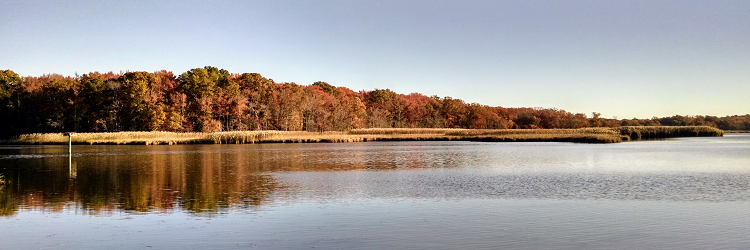
Prototype courtesy of Michael Miles - MDE.
What is the Chesapeake Bay?
Estuary Basics
The Chesapeake Bay is an estuary (leaving MDE) and is the largest ecosystem of its kind in the U.s.a.. Estuaries are partially enclosed littoral bodies of water that occur where freshwater from streams and rivers mixes with saltwater from the sea. This combination of freshwater and saltwater is chosen brackish water (leaving MDE) and is responsible for the slightly salty odour of the Bay.
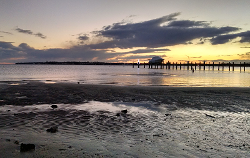
Image courtesy of Michael Miles - MDE.
A Transition Between the State and Bounding main
Estuaries are transitional ecosystems between the state and the sea (leaving MDE). They are composed of wetlands, tidal marshes, mudflats, underwater grass beds, and areas of open water. This varied and dynamic range of habitats provides a dwelling to hundreds of animal and plant species. Additionally, the various habitat in the Chesapeake provides vital convenance grounds for many fish and crustacean species; the sheltered tidal marshes provide a condom place for the young to grow while open up waters provide pond and feeding grounds for adults.
State-Water Interactions
The Source of Freshwater in the Chesapeake
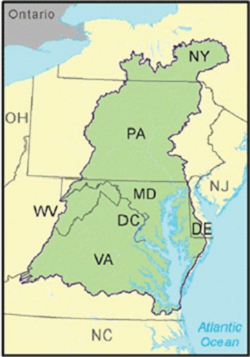
Freshwater flows into the Chesapeake Bay from the surrounding country in a drainage area known as a watershed. Water that falls in the watershed flows into rivers and streams (leaving MDE), or percolates into the groundwater (leaving MDE), where it makes its way into the Chesapeake Bay and ultimately, the Atlantic Body of water.
The Chesapeake Bay has a vast watershed (leaving MDE) that spans 64,000 square miles and encompasses parts of six states; Delaware, Maryland, New York, Pennsylvania, Due west Virginia, and the entirety of the District of Columbia. Water from these regions flows into the Bay, carrying with it an array of nutrients, sediment, and pollution.
Nutrients Ability Productivity
Estuaries are among the most fertile and productive ecosystems in the globe. They host a vast amount of biological action that produces more biomass than similarly sized forest or agricultural country. Nutrient-rich water from the surface drains into the estuary bowl and drives biological productivity. Plants and aquatic organisms filter and consume nutrients as they enter the water. This flow of nutrients into the Chesapeake is a fragile balancing human activity, one that humans have disrupted.
Oxygen in the Water is Essential to Life
Similar their air-breathing counterparts, most aquatic life requires oxygen to survive (leaving MDE). Unlike air, h2o carries relatively little oxygen. To compensate, animals that live and breathe underwater are peculiarly adapted to have as much oxygen as possible from the water. While oxygen levels normally vary in the Bay, human being activity has disrupted natural processes that have caused oxygen levels in parts of the Bay to dip dangerously low.
A Dwelling for Plants and Animals
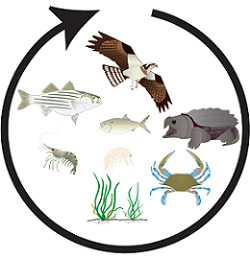
Image courtesy of Michael Miles - MDE, Symbols courtesy of the Integration and Application Network, Academy of Maryland Center for Environmental Scientific discipline (ian.umces.edu/symbols/).
The Foundations of the Food Chain
Nutrients in the water are essential for life in the Chesapeake. Plants, algae, and plankton feed on nutrients and flourish as a result of the rich waters that catamenia into the Bay. Organisms that produce their own food using sunlight and food inputs are known every bit primary producers and form the foundation of the food chain (leaving MDE).
Larger organisms, such as fish, crabs, and mollusks, feed on the primary producers, and in plough, are preyed upon by larger fish, birds, and mammals. Different animals feed on many different organisms in the Chesapeake, forming what is commonly known as a nutrient spider web. This food web supports a tremendous amount of life in the Bay (leaving MDE) and has benefited humans for thousands of years.
Plants Provide Clean Water and Protection
Epitome courtesy of Michael Miles - MDE.
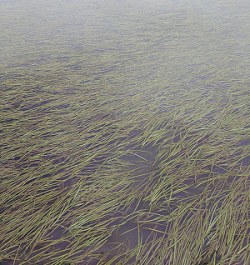
Aquatic plants are of great importance to the Bay (leaving MDE). While few plants can survive the diverse range of habitat found in an estuary (leaving MDE), plants that live in the Bay are specially adapted to survive variable conditions. In detail, Bay plants thrive under variable table salt content ranging from the freshwater in the headwaters of the Bay, to the salty waters of the Atlantic Body of water.
Bay plants help filter the water and provide vital breeding grounds and nurseries (leaving MDE) for many species. In addition to forming the foundation of the food spider web, plants and underwater grasses act as living buffers that shield the Chesapeake's open waters and shores from storms. This living bulwark is a resilient defense force confronting shoreline erosion and helps protect inland ecosystems and valuable shoreline properties from destructive waves.
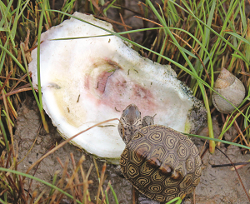
Image courtesy of Jane Hawkey - IAN, UMCES.
Wild animals in the Chesapeake
Even in a degraded state, the Chesapeake is habitation to many types of wild animals (leaving MDE) and is among the most important ecosystems in the earth. The Chesapeake Bay supports hundreds of species of fish, shellfish, amphibians, reptiles, birds, and mammals. These animals either live permanently in the Chesapeake, or use it as a temporary resource while migrating through the region.
Wildlife in the Chesapeake makes utilize of the various habitats (leaving MDE) to reproduce, raise young, and to live equally adults. Many of these species depend on one some other and cannot survive drastic changes to their ecosystem (leaving MDE). While poor water quality nonetheless threatens wildlife, cleanup efforts have improved conditions and species are starting to render (leaving MDE).
Trees Filter Water and Prevent Erosion
While nigh trees are not part of an estuary, they are essential to a salubrious Bay. In addition to providing habitat, trees filter water and hold soil in identify.
Learn more about how forests assistance clean the Bay (leaving MDE)
Why is the Chesapeake Bay Important?
Epitome courtesy of Ben Longstaff - IAN, UMCES.
Maryland'south National Treasure
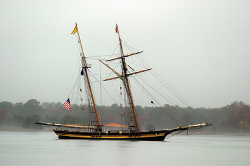
The Chesapeake Bay is intrinsic to life in Maryland. It is office of our state identity, local civilization (leaving MDE), and a vibrant office of Maryland's history and Country pride (leaving MDE).
The Chesapeake is a natural wonder that thousands of people travel great distances to feel for only a short time. It provides its inhabitants with a wealth of resources, natural beauty, economic well-beingness, and national identity. Chesapeake Bay is our National Treasure; a treasure worth investing in, preserving, and protecting for futurity generations of Marylanders to enjoy.
Ecosystem Services
Maryland Is Taking Activeness
The Chesapeake Bay provides countless environmental, social, and economic benefits. Bay cleanup efforts ensure that we preserve and protect our National Treasure for hereafter generations.
Larn More
Many of the animals in the Bay perform ecosystem services (leaving MDE). In other words, these organisms perform a service that benefits the surround, including filtering water or preventing shoreline erosion. One of the most prominent examples in the Chesapeake of an organism performing an ecosystem service is the native eastern oyster (Crassostrea virginica) (leaving MDE). These small-scale mollusks are capable of filtering large volumes of water and were once one of the chief filters of the Bay. In addition to cleaning the Bay's waters, Chesapeake Bay oysters continue to be a popular delicacy that many Marylanders relish.
Other organisms play various roles in maintaining the wellness of the Bay and form a fragile, interconnected web that helps protect the Chesapeake from pollution. The combined ecosystem services provided by these animals are irreplaceable and are worth billions of dollars in benefits to humans (PDF - leaving MDE).
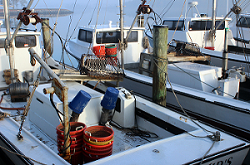
Image courtesy of Jane Hawkey - IAN, UMCES.
Fisheries
The Chesapeake Bay is one of the most productive fisheries in the United States and is estimated to be responsible for more than than one-tertiary of the Nation's annual bluish crab harvest (leaving MDE). In 2014, watermen in Maryland harvested approximately 49 1000000 pounds of seafood from the Chesapeake, valued at nearly 90 meg dollars dockside (leaving MDE).
In improver to blue venereal, the Bay provides rockfish (leaving MDE), shad (leaving MDE), oysters (leaving MDE), clams (leaving MDE), and other seafood. The bountiful waters of the Chesapeake course an important part of the Maryland economic system and have provided a livelihood for thousands of watermen and other seafood industry workers for hundreds of years.
Recreation
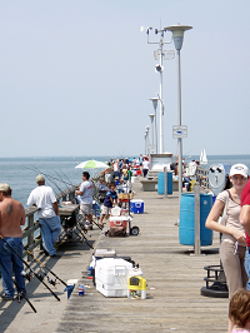
Epitome courtesy of Ben Fertig - IAN, UMCES.
The Chesapeake Bay offers many opportunities (leaving MDE) for recreational line-fishing, boating, bird watching, and other outdoor activities. Flowing through the centre of Maryland, the Chesapeake is central to our way of life. The wealth of outdoor opportunities (leaving MDE) and natural riches the Bay provides makes Maryland a desirable living surface area for humans. A healthy and clean Chesapeake provides innumerable benefits and improves our quality of life.
Tourism
Fresh local seafood, historical waterfront towns, sailboats on scenic rivers, and a wealth of wildlife accept long made Maryland an bonny travel destination (leaving MDE), driving a good for you tourism industry. A vibrant Chesapeake brings thousands of tourists to Maryland every twelvemonth to enjoy our National Treasure and support local businesses (leaving MDE).
Up Next: Challenges for the Chesapeake
Maryland's National Treasure faces a severe threat from nutrient pollution that degrades h2o quality and threatens the wellness of the Bay. Degraded water quality harms the Bay, the local economy, and our quality of life.
Learn more than about how nutrient pollution harms the Bay.
Contact Information
Center_Content

What Ecosystem Services Are Provided By The Chesapeake Bay,
Source: https://mde.maryland.gov/programs/Water/TMDL/TMDLImplementation/Pages/what-is-the-bay.aspx
Posted by: ramirezdecterral52.blogspot.com
0 Response to "What Ecosystem Services Are Provided By The Chesapeake Bay"
Post a Comment